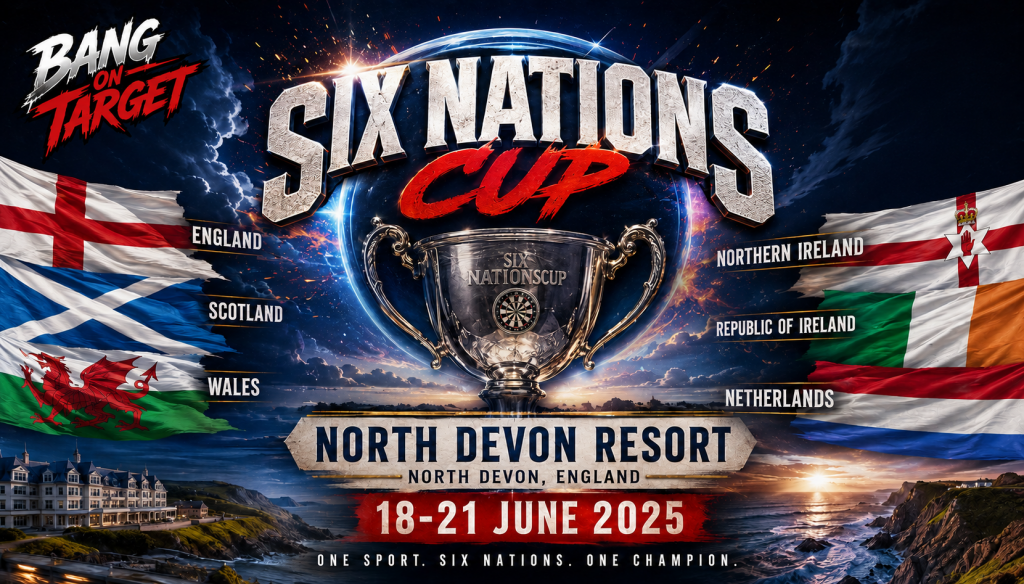
It’s Six Nations time – and I don’t mean the tournament where fifteen large, sweaty blokes on each team from various corners of Europe spend eighty minutes discovering who can collectively shove the other side backwards the furthest. No, I’m talking about the darts version.
In this particular Six Nations, France and Italy don’t even get a sniff. Instead, it’s the usual British suspects of England, Scotland, Wales and Northern Ireland, accompanied by the Republic of Ireland and the Netherlands to make up the numbers.
South-West England is the destination where many of the finest arrow-smiths from the amateur game – and Jarred Cole – will descend upon the North Devon Resort in pursuit of national pride and silverware. Just learnt that’s actually in South Wales but if you want to make sure that’s clear – don’t name a venue in your own country after an English county!
Last year it was England who emerged victorious in both the men’s and women’s competitions. So, with the World Cup of Darts already safely in the trophy cabinet and the football lads making a decent fist of things against Croatia, it could be shaping up to be quite the summer for Blighty. Until Wimbledon arrives, of course, which is traditionally where we trip over our own shoelaces and land on our arses. We can’t even cheer on Andy Murray whenever somebody wins anymore. The Scot has retired and is now off somewhere else, presumably boring a fresh set of people to death with tales of hip replacements and Padel Tennis.
Each nation squad comprises of five men and three women, with the six countries already divided into two groups. So, in essence, it’s a cheeky little round robin, with the top two progressing to the semi-finals and, from there, I’m sure you can work out the rest.
Actually, allow me a brief detour because I’ve always wondered why it’s called a round robin.
Right, I’m back. Apparently, the term originates from seventeenth-century sailors who signed petitions in a circle, so nobody could be identified as the chief troublemaker and subsequently thrown overboard or given a rather unpleasant introduction to the lash. It derives from the French phrase rond ruban – meaning “round ribbon” – which somehow evolved into round robin over the years.
Before then, every small sporting competition where everybody played everybody else was presumably organised by Steve the sailor saying, “Let’s all just play each other once, shall we?” before adding, “Honestly lads, we really need a proper name for this.” Entirely speculative, naturally, but no less plausible than some things the BDO came up with. And let’s call a spade a spade, whenever that lot came up with anything, it was like an emu dressed in medieval armour trying to take off from a trampoline. Anyway, back to the arrows.
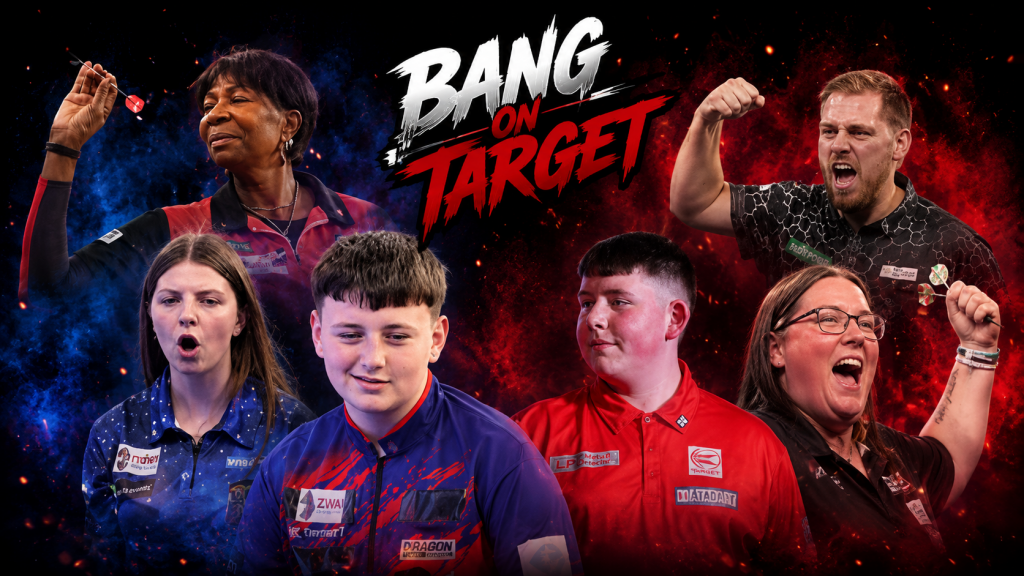
In the men’s competition, England find themselves alongside the Netherlands and Northern Ireland, while Wales, Scotland and the Republic of Ireland occupy the other group. Not content with one draw, the ladies’ event offers a different arrangement, with the Dutch, Scotland and Wales in Group One, while England and both ends of the Emerald Isle make up Group Two. Somebody at the organiser headquarters clearly wanted to give the impression they had earned their tea break.
WDF take note. It’s refreshing to see a major and esteemed amateur event somewhere that doesn’t require a flight longer than one of Justin Pipe’s visits to the oche, accommodation costs that would bankrupt a small principality, and a venue in the middle of the desert requiring three connecting flights, a visa and the patience of a saint to reach.
One notable absentee from Devon will be Mr WDF himself, Neil Duff. Granted, he hasn’t exactly been uprooting forests in the sport, but you’d have thought he’d squeeze into a five-man Northern Ireland side. It’s not as though he’s currently enjoying his timeshare in Portsmouth after already qualifying for the MODUS Super Series Finals, which are still a few weeks away. Perhaps he’s saving his pennies for Las Vegas. Who knows? And, more importantly, who really cares?
So there you have it. A tournament which first emerged in 2002 under the old BDO banner, before that once-proud darting juggernaut eventually convinced itself – in almost draconian fashion – that the future of darts lay in stubbornly clinging to the past.
Wishing every nation the very best. By that, I naturally mean England and anyone I happen to know from the others. Barry The Pear a good example of sending my best to.
And if you’re unfortunate enough to be drawn against Scotland, perhaps your best tactical move would be to send Mitchell Lawrie to the nearest sweet shop with a fiver and directions that expired twenty miles ago. The lad hits maximums with the same alarming ferocity that his compatriot Cameron Menzies does with furniture.
ENGLAND MEN
Jarred Cole
Sean Holley
Lloyd Pennell
Jenson Walker
Carl Wilkinson
ENGLAND LADIES
Deta Hedman
Paige Pauling
Laura Turner
WALES MEN
Llew Bevan
Mark Challenger
David Davies
Leuan Halsall
Liam Meek
WALES LADIES
Rhian O’Sullivan
Rachel Kingdon
Eve Watson
SCOTLAND MEN
Jamie Bain
Scott Campbell
Davie Kirwan
Mitchell Lawrie
Scott Robertson
SCOTLAND LADIES
Lorraine Hyde
Susanna McGimpsey
Sophie McKinlay
NETHERLANDS MEN
Johann Brouwer
Maikel Nüchter
Berry van Peer
Danny van Trijp
Marc Vleghert
NETHERLANDS LADIES
Priscilla Steenbergen
Kelly Streef
Adriana van Wijgerden Vermaat
NORTHERN IRELAND MEN
Ricky Dunlop
Dean Fitch
Darryl Loughery
Gary Surgenor
Mark Yeates
NORTHERN IRELAND LADIES
Tammy-Jo Grafton
Julie Leahy
Kayleigh O’Neill
REP. OF IRELAND MEN
Adrian Devine
Damien Grimes
Dale McCarthy
Gerard McGlynn
Raymond Mulvey
REP. OF IRELAND LADIES
Rebecca Allen
Sara Joyce
Teresa King