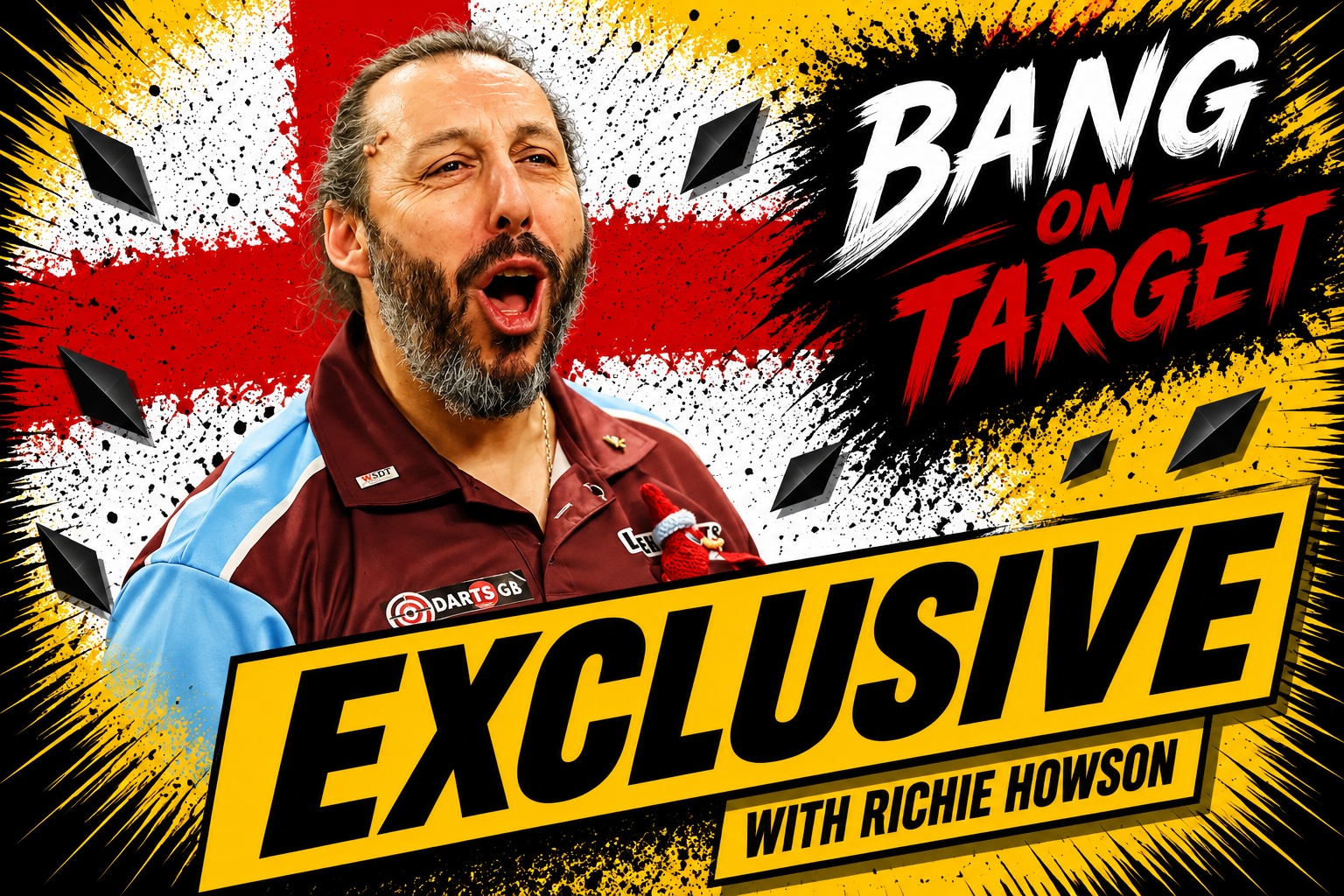



PRIME TIME IN SIN CITY
There are professional darts players who spend every waking hour practising. They analyse statistics, obsess over equipment, play every event they can find and treat preparation with the seriousness of a Formula One engineer preparing a car for a race.
Then there is Matt Edgar, who admittedly spends much of his life doing all of the above, while also commentating, creating content and having his fingers in so many pies that Mary Berry would be very pissed off. Yet somehow, he rocked up to the WDF World Masters in Las Vegas and very nearly stole the show.
The Doncaster-born former professional turned commentator headed to Sin City with no grand declarations or promises of glory. If anything, his expectations were fairly modest. Yet by the end of the week, he had reached two quarters and a final, leaving many wondering whether the man who talks about darts for a living might still be annoyingly good at actually playing:
“I would describe Vegas as a roaring success on every front for me personally. My darts went really well, probably more than I expected when I played 17 matches and I averaged around about the 90 mark. For the World Masters I hit the most 180s of anybody in the field, which is unusual for me because I don’t really hit a lot of 180s.”
For anyone who follows Edgar’s content, that last sentence is roughly equivalent to discovering your accountant secretly fronts a heavy metal band at weekends. It simply wasn’t what anybody expected. However, there was a reason behind the improvement. Years of injury have forced significant changes to his throw and, for once, necessity became the mother of invention.
“I wasn’t really able to use the wrist as part of my throw as much as I used to. So I’ve had to move that sort of rotation and movement into my shoulder, lower the elbow and change the angles, which is why I’ve been able to go back to the slim flights I used before.
“Those technical changes really did shine through. I wondered if consistency was going to be there, but I was very happy with the level of consistency.”
The consistency certainly showed itself on the doubles, traditionally the place where dreams go to die and grown adults suddenly forget basic mathematics.
“Checkout percentage was running around the 42% mark for the majority, which I’m delighted with because that was the thing I thought I was going to need if I’m going to be competitive and win matches.”
“Around the 42% mark” sounds more far more accurate than a general assessment. But perhaps the most ridiculous part of all this is that Edgar doesn’t exactly spend his days grinding away on the practice board.
“I’m not even a recreational player. I don’t even play pub darts, Super League, county tournaments, don’t play anything. My practice is bare minimum, if anything. Just when I’m making content, I’m practising.”
Which is wonderful news for Matt, but absolutely horrific news for the thousands of county players currently wondering why they bothered spending three nights a week in a freezing social club all winter.

WHAT HAPPENS IN VEGAS… ENDS UP ON DARTS CONNECT
If there is one thing darts fans enjoy almost as much as darts itself, it is having a vigorous disagreement about darts. Give the community a controversial decision and within minutes social media resembles a family Christmas dinner where somebody has accidentally brought politics into the conversation.
The decision to move the WDF World Masters to Las Vegas certainly fell into that category, with many questioning the costs involved and the impact on players who suddenly had to organise a trip across the Atlantic. And that’s without worrying about the whole visa complications.
Edgar, however, freely admits he might not be the most neutral witness in the room. Vegas is hardly somewhere he needed convincing to visit.
“Moving the World Masters to Vegas? I am probably the wrong person to ask. And that’s because I know, and I understand that I’m in a luxury position where I can be very flexible with my time and move jobs around.
“Financially wise, I’m quite sound and stable. So selfishly, I was very happy when it moved to Vegas. If it was in Budapest, I probably wouldn’t have gone.”
At least it is an honest answer. Many people would spend three paragraphs pretending to be objective before revealing they had already packed their suitcase and booked a seat by the pool. Edgar simply skipped straight to the truth. The attraction was not just the World Masters itself, but the location.
“Part of the pull for me wasn’t just the Masters and the 50th year anniversary, which is amazing. It was the venue as well. I’ve been in Las Vegas, I’m a big fan of Vegas. I’d go there at any opportunity. So, I loved it.”
What he means by that, is that he’d go every time they staged anything to do with WWE there. As reviews go, that is slightly more enthusiastic than “it was alright.”
Yet beyond the bright lights, giant hotels and the possibility of losing your life savings before breakfast, Edgar was particularly impressed with how the tournament itself was delivered.
“I thought it was fantastic. Amazing venue, good air conditioning, amazing facilities, couldn’t grumble or want for anything more. It was a fantastically ran event. The WDF did an amazing job. I can’t knock them for anything.”
That does not mean he believes every issue magically disappeared. Rather, he approaches criticism differently to many people who spend their evenings shouting into the digital void.
“If you can’t think of the solution to the problem, don’t highlight the problem. Because it can’t be, this is wrong, someone needs to fix this. It needs to be, this is wrong, we need to do this instead.”
The one area where he would like to see progress is the prize fund.
“I think if the prize money goes up, the glitz, the glamour, everything about the World Masters, it will become a major event back in the calendar again.”
I agree. Once the Youth winners had been to watch a movie and brought some popcorn, their winners were gone. Yet for Matt, the verdict is simple.
“It’s got a three-year deal in Vegas. I think it’s superb. I think it added the glamour. I think it added everything back to the World Masters. It really did feel like the World Masters.”
And in a sport where people can argue for three hours over the correct way to hold a dart, that is about as strong an endorsement as you’re ever likely to hear.
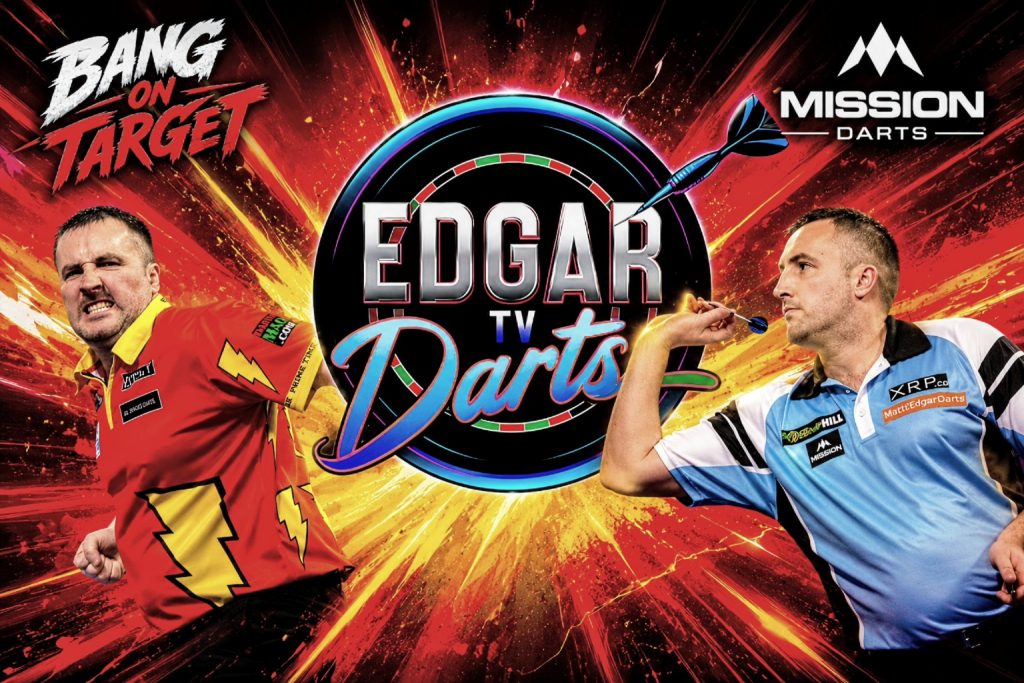
Q-SCHOOL: THE QUESTION THAT REFUSES TO DIE
Whenever a former professional player produces a good run in a tournament, darts fans immediately reach the same conclusion. It does not matter whether the player has won one match, reached a quarter-final or simply managed to hit a 140 without pulling a muscle. Within seconds, somebody will ask the inevitable question.
“Are you going to Q-School?”
As far as Matt Edgar is concerned, it is a question that follows him around more faithfully than a supermarket loyalty card. His performances in Las Vegas only added fuel to the fire, particularly after producing averages that reminded everyone the ability has never gone anywhere.
“Q-School’s the golden question that just keeps coming up time and time again. I think because I’ve put in a couple of 98 averages and 100 averages, it shows that the level is there, and the ability is there.”
The problem, according to Edgar, is not talent. Plenty of players possess talent. The real challenge is producing that level day after day, week after week, while living the relentless existence that comes with being a tour card holder.
“My top end’s fine. Everyone’s top end’s fine. Everyone’s got the ability. But it’s how often you can bring that out that is the issue. And on the tour, it needs to be time and time and time again.”
That reality is often forgotten by fans watching from home. Professional darts can look glamorous on television. Bright lights, walk-ons, roaring crowds and giant cheques. The reality can sometimes be considerably less glamorous, involving alarm clocks set at ridiculous hours, motorway service stations and long drives home wondering how you’ve managed to spend money whilst simultaneously earning none.
Edgar knows that life well enough to have little desire to revisit it.
“Would I like to be a tour card holder again? No. I don’t see a benefit of being a tour card holder for me personally in my circumstances. If anything, I would probably take a significant pay cut to be able to do so.”
It is a refreshingly honest answer in a world where many people pretend every decision is purely about sporting ambition. For Edgar, life has changed.
“I’ve got used to a lifestyle now where if I go to work, I get paid and I don’t want to come away from that.”
There has been temptation, of course. The thought has crossed his mind, particularly when the darts are flowing, and the averages are climbing.
“Of course I’ve been tempted. I’ve even been tempted to look at it and go, well what if I did it and just did the UK Open and the Masters and the World Championship qualifiers?”
However, there are complications beyond simply winning a tour card. His commentary commitments, media work and content creation would all become far more difficult to balance.
“Certainly it would affect my commentary work. You can’t have someone play one ProTour and then commentate on the next. It’s just not a good look.”
So, for anyone hoping Vegas was the start of a dramatic comeback story, Edgar’s answer remains crystal clear.
“I don’t see Q-School being on the horizon anytime soon. I’m not going to say never because you never know what happens. But as things stand, it’s not for me.”
In other words, darts fans can stop asking. At least until next week when he chucks a nine-darter down his local.
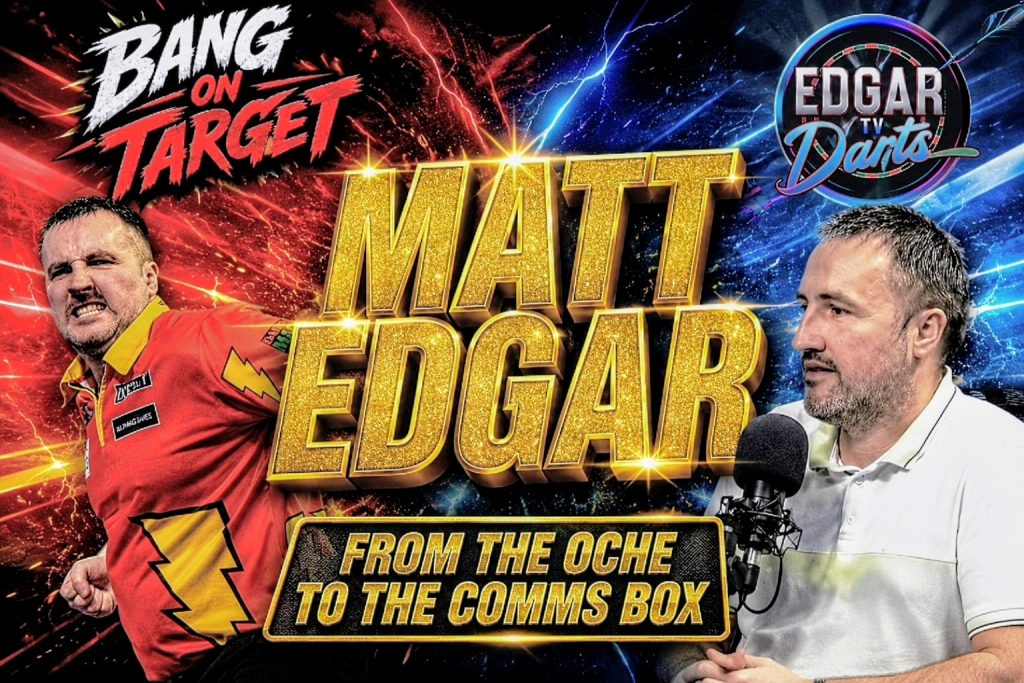
FROM THROWING DARTS TO THROWING OPINIONS
Retirement from the professional game arrives with all the planning and preparation of a stag do organised by the bloke everyone secretly regrets inviting. One day they are competing on the biggest stages in the sport and the next they are trying to work out what to do with themselves on a Thursday afternoon. Some disappear entirely. Others pop up occasionally at exhibitions. A select few make the leap into commentary.
Matt Edgar, however, had his eye on that route long before he stopped competing regularly.
“Commentary is actually something I probably wanted to do more than anything. Even when I was playing, I was thinking of commentary. Even when I was playing, I was looking at the likes of Wayne Mardle, Chris Mason and Paul Nicholson who made those transitions.”
While many players spend their careers concentrating solely on winning matches, Edgar was studying something else entirely. He wanted to understand why certain commentators connected with audiences and why others became such important voices within the sport.
“What were they doing? What made them so good at their job? What made them stand out? There’s a lot of people that played this sport and come away from the top end and the elite, but there’s only a few that have managed to make that transition across.”
The obsession actually started long before darts became his profession. In fact, it goes all the way back to childhood, which may explain a lot about Matt Edgar in general.
“I was a child that would sit at home playing FIFA on the Mega Drive or wrestling games. I’d turn the sound off and I’d sit and do my own commentary on my games because that’s what I really wanted to do.”
Most children dream of scoring the winning goal in a World Cup Final. Matt was apparently more interested in describing it afterwards. It’s a slightly unusual ambition, but then darts has never exactly been a sport overflowing with normal people.
The passion remains obvious today, which is why one particular thing occasionally frustrates him.
“I’ve been doing commentary now for about four years and I work so hard at it. Then when I sort of say something and you see these articles go ‘ex-PDC pro’ it’s like, yes, I’m a former professional darts player, but I’m also a current commentator and have been for a period of time. Give me my title.”
To be fair, he has a point. Nobody introduces Gary Lineker as “former Leicester reserve player.” At some stage your current job probably deserves top billing.
The reason it matters is simple.
“I do work so hard at it. I look for feedback all the time. I’m working with industry professionals to always try and improve and get better.”
That hard work has opened plenty of doors.
“I commentate on the MODUS Super Series. I’ve worked alongside Sky down at the studios. I work for the BBC. I work for the PDC on Euro Tours, Pro Tours, Women’s Series and all sorts of different bits.”
For Edgar, the future remains clear.
“I want to be more full-time on commentary. Just keep developing that, keep developing my style and keep learning.”
Not bad for a bloke who used to sit in front of a Mega Drive commentating on his own FIFA matches. Somewhere, eight-year-old Matt Edgar is probably feeling quite smug about how this all turned out.
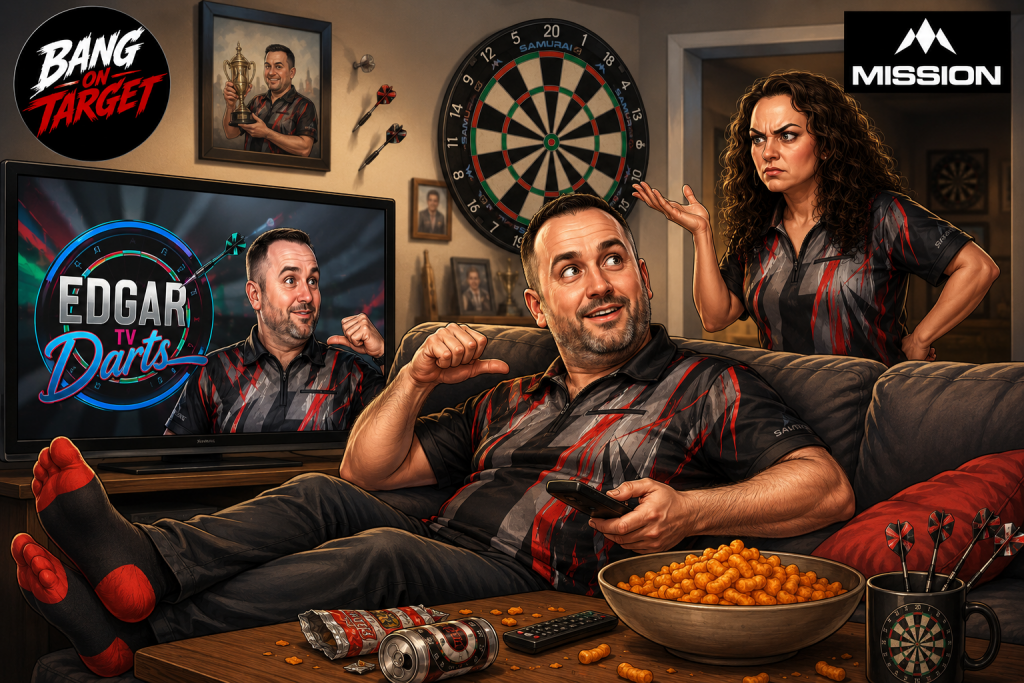
EDGAR TV: THE WORLD’S MOST CHAOTIC PART-TIME JOB
In modern darts, every player, former player, commentator and bloke who once hit a 180 in a working men’s club seems to have a YouTube channel. Most disappear faster than a free buffet at a county darts presentation evening.
Matt Edgar’s, however, has become one of the most respected content platforms in the game, largely because he has built a reputation for saying what he thinks, explaining the sport properly and occasionally detonating popular myths with the enthusiasm of a man kicking over a wasps’ nest.
The strange thing is that despite its popularity, Edgar has absolutely no intention of turning Edgar TV into a full-time operation.
Which, in today’s world of influencers, algorithms and people filming themselves opening cardboard boxes for a living, feels refreshingly sensible.
“Edgar TV is something I absolutely love doing, but like with all things I juggle so many hats and wear so many different systems that it just has to fit in with the time frame.”
That sentence probably understates the situation somewhat. Between commentary work, broadcasting commitments, travel, media appearances and everything else on his increasingly crowded schedule, finding time to create regular content can sometimes feel like trying to book an NHS dentist appointment on a bank holiday weekend.
That said, things are improving.
“One thing I’m getting better at doing is getting ahead of schedule, so being able to put things into place and scheduling content and videos.”
For viewers who occasionally fear Edgar TV has vanished into the same mysterious dimension occupied by flying cars and affordable pints, that should come as reassuring news. However, if anyone is expecting daily uploads, twenty-hour live streams and enough content to rival the BBC archives, they may need to lower their expectations slightly.
“It’s never going to be a full-time thing for me. It’s something I enjoy, and I don’t want it to become a full-time thing because I don’t want to take away the enjoyment.”
It’s a lesson many people learn the hard way. Turn a hobby into a job and suddenly the thing you once loved starts feeling like an overdue tax return. Edgar has seen that happen often enough to know better.
“There’s so many times in my life that my hobby’s become my work and I really enjoy making the YouTube and the TikTok and all the different content, so I don’t want it to become my job.”
Ultimately, the channel remains exactly what it has always been: a passion project driven by somebody who genuinely loves the sport and enjoys talking about it.
“I’m very, very happy with where things are at the moment with it and hopefully people are enjoying the content as well and go and hit those subscribe buttons.”
A shameless plug? Absolutely. But after spending years providing darts fans with insight, analysis and the occasional uncomfortable truth, he’s probably earned it.
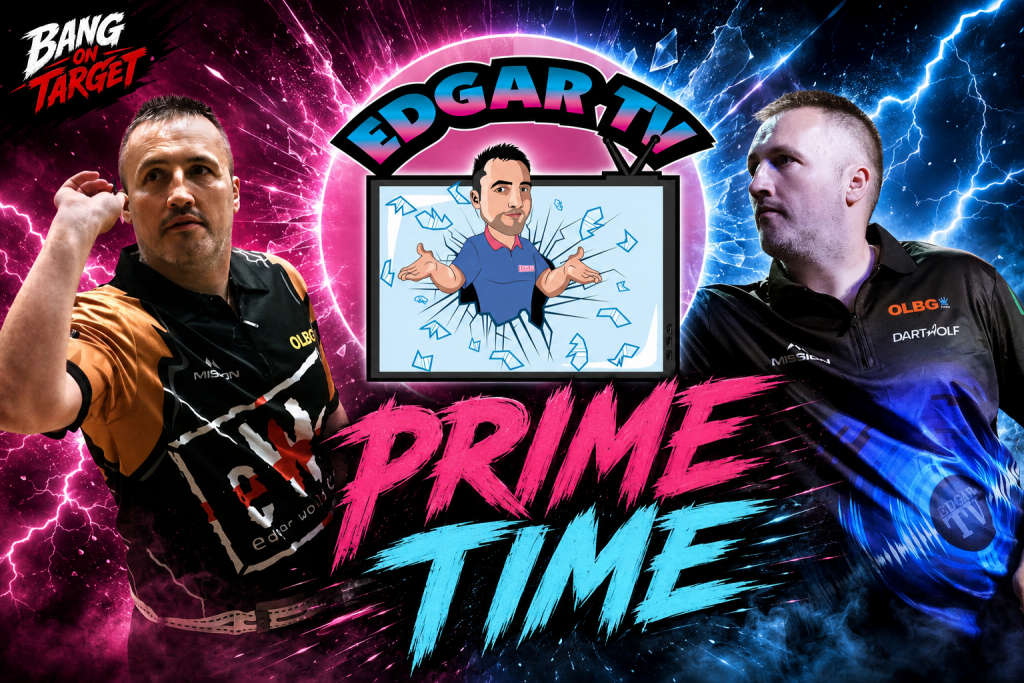
ROYAL RUMBLES, TRIPLE THREATS AND TOTAL MADNESS
Every interview eventually reaches the point where sensible discussion goes out of the window and somebody asks a question purely because they want to see what happens next. In this case, it involved professional wrestling.
Given that Matt Edgar is a lifelong wrestling fan, it was probably inevitable that the interview would finally reach said topic. Thankfully, Edgar did not disappoint:
“Coming from the man who asked Johnny Clayton about the death of Hulk Hogan, I expected to see a wrestling question in here somewhere.”
Yeah. I do remember that fondly! That is probably the closest Matt came to accusing the interviewer of being completely ridiculous. Although, in fairness, if darts interviews never wandered off into bizarre territory, we’d all be significantly less entertained.
Like many wrestling fans, Edgar admits there is one WWE concept he has always loved.
“For me, the Royal Rumble has always been a concept I’ve really liked.”
Now, before anyone gets too excited, there is absolutely no suggestion that Luke Humphries will soon be entering the Winter Gardens at number seventeen while pyrotechnics explode around him and Michael van Gerwen waits backstage with a steel chair. Although if television ratings ever become a concern, it would certainly be worth discussing.
However, Edgar’s real idea was something arguably even more chaotic.
“I would like to see a triple threat darts match. That would be amazing. Three players on the stage at all times.”
At this point, every darts referee reading this probably felt a sharp pain behind the eyes.
Imagine it for a moment. Three players. Three sets of darts. Three egos. One stage. The scoring software would require therapy before the first commercial break. Social media would instantly divide into seventeen different factions arguing about throw order, averages and whether somebody had accidentally stood six inches too close to the oche.
Naturally, Edgar has already thought about the tactical side.
“I think it would really amplify the advantage of throwing first. And it gives so many different dynamics to things as well. I think it would really pressurise the throw.”
The scary part is that he’s probably right. Darts has spent decades searching for ways to freshen up formats, introduce new concepts and create different challenges. Meanwhile, Edgar has casually suggested turning every match into organised chaos.
“Three players on the stage, I think. I don’t know why it hasn’t happened. I think it would be an amazing project.”
And perhaps that perfectly sums up Matt Edgar.
Whether he’s analysing a tournament, commentating on the sport, creating content online or discussing wrestling-inspired darts formats that would give tournament directors immediate heart palpitations, he sees the game differently.
Las Vegas proved Mr Prime Time can still play at a remarkably high level. His commentary career continues to go from strength to strength. Edgar TV remains one of the most respected voices in the sport.
As for Q-School? Probably not. In fact, let’s make that a ‘certainly not’
A triple-threat darts match involving three players and absolute carnage? Honestly, that sounds far more likely.
Thanks Matt for your time. I would wish you good luck on comms duty going forward but you seem to have that nailed mate.